
A quick answer: how to choose fabric and yarn for punch needle
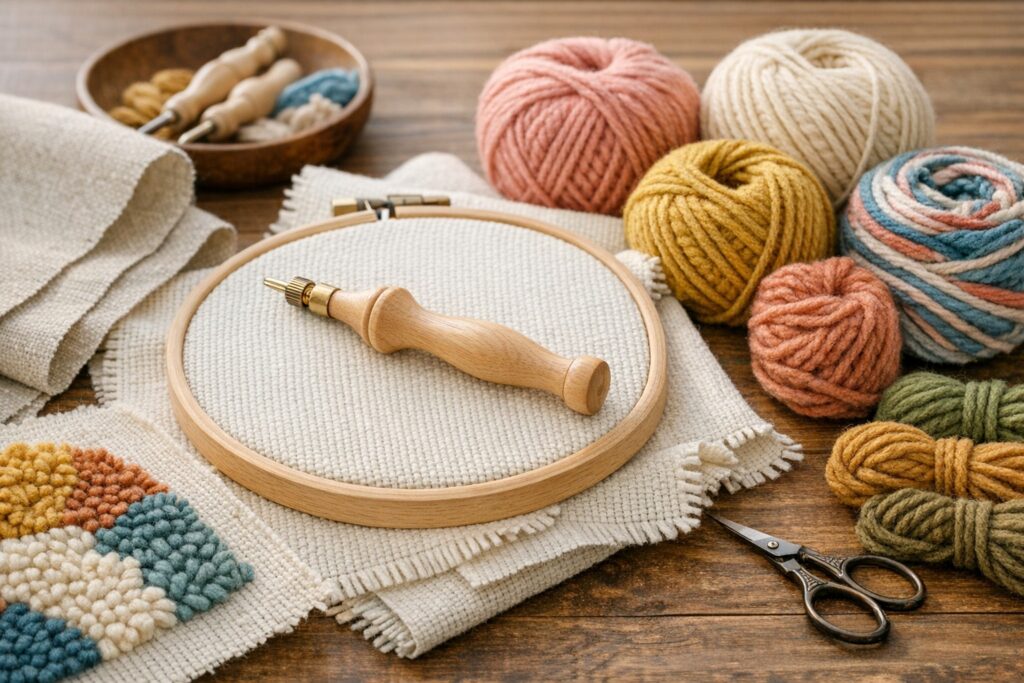
For a successful punch needle project, the fabric and yarn you pick determine how clean your loops sit, how easy the stitches are to create, and how long the finished piece will last. A good starting setup uses an even-weave fabric with a relatively regular grid and a yarn that can create the desired loop height without breaking the fibers. Beginners should look for fabrics that offer even spacing and a sturdy backing, and yarns that are forgiving, easy to handle, and available in a range of thicknesses. The goal is to balance ease of use with the texture you want. Swatching small samples before committing to a full project is the best way to know if a fabric-yarn combo works for you.
Understanding the basics of punch needle fabrics
What is an even-weave fabric?
An even-weave fabric has a regular, uniform grid of fibers in both the warp and the weft, so the threads align at regular intervals. This square-like structure makes it easier to insert a punch needle at a consistent distance and to control the height and density of the loops. Even weave fabrics reduce the chance that loops will sink too deeply into the fabric or skip rows, which helps beginners achieve neat, even stitches.
Common fabrics used for beginners
Several fabrics are popular among new punch needle crafters. Each has its own feel, look, and level of difficulty. The key is to choose a fabric that provides a predictable grid and suffices to support the loop height you want.
- -Monk’s cloth – A classic choice for beginners. It is a loosely woven, sturdy fabric with a visible grid that helps guide stitches. It tolerates a range of loop heights and tends to be forgiving if tension shifts during your first projects.
- – Tighter than monk’s cloth but still even-weave. Linen produces crisp, durable surfaces and works well for detailed designs when you’re ready for more control.
- – Widely available and familiar to cross-stitchers. It provides a clear grid, which can help with small, precise designs. It may be less forgiving with very dense loops, so beginners should test loop height on a small sample.
- -Weaver’s cloth or other canvas-like fabrics – These fabrics offer an even grid and good durability. They’re a versatile option for various loop heights and textures.
How to evaluate a fabric for punch needle suitability
When you assess a fabric, consider these practical factors:
- – The fabric’s grid should be consistent in both directions; otherwise, loops may drift or appear uneven.
- – A stable backing helps prevent fabric distortion as you punch. A slightly firmer weave is often easier for beginners.
- – A fabric with a visible, moderate grid supports even loop heights without requiring extremely tight tension.
- – Look for fabrics that can be easily cut and secured in a hoop or frame, and that can tolerate a light wash or heat-set if needed.
Choosing the right yarn for punch needle
Yarn weight and fiber types
Yarn weight refers to how thick the yarn is, which will influence the size of the loops and the amount of fabric that is covered with each pass. For beginners, a medium thickness is usually most forgiving, providing visible texture without requiring very tight or very loose stitches. Common fiber types include:
- – Smooth, steady, and available in a range of thicknesses. Suitable for projects that require a crisp look.
In general, choose a yarn that is not too slippery and not too fuzzy. Extremely fuzzy or tapestry-like yarns can tangle or shed, while very slick yarns may not hold their loops as well.
Color, dye lots, and texture considerations
Color matters for the final look. A good practice is to select a main color and a few accent shades that read well against the fabric’s background. When using multiple colors, be mindful of dye lots: if you buy yarns in separate lots, the color can vary slightly from skein to skein. To avoid mismatched results, either purchase all the required yarn at once from the same dye batch or test color matches in advance. Texture matters too: yarns with uniform thickness produce consistent loops; highly textured yarns can create a more varied, tactile surface, which may be desirable for certain designs.
Swatching with yarn: a simple test
Before starting a project, punch a small swatch on your chosen fabric. Use the same needle, loop height, and tension you expect to use for the final piece. Check the following:
- Whether the loops sit evenly on the grid and do not pull the fabric excessively.
- Whether the yarn covers enough area with each pass and creates the texture you want.
- Whether color changes are clean and the yarn behaves when you pull it through the fabric.
If the swatch looks uneven or the fabric puckers, adjust the yarn weight, go up or down a needle size, or try a different fabric. Swatching is a quick, inexpensive way to avoid frustration on a larger project.
Practical steps to select your fabric and yarn
- – Decide whether you want bold, high-contrast textures or delicate, detailed work. This guides your choice of fabric and yarn thickness.
- – Start with monk’s cloth or a linen-blend with a clearly visible grid. These fabrics balance ease of use with potential for detail as you improve.
- – Inspect the fabric surface for a uniform grid. Look for any irregularties or worn spots that could affect your stitches.
- – Pick a yarn that matches your fabric’s grid and desired loop height. For learning, choose a medium-weight wool or acrylic yarn in several colors for swatching.
- – Use a hoop or frame to keep the fabric taut. Trim edges to prevent fraying and secure the fabric with clips or a temporary adhesive if needed.
- – Punch a small sample with your planned loop height, then evaluate density, texture, and evenness. Adjust as needed.
- – Sketch a simple design on paper or directly onto the fabric using removable markers. Decide how many colors you’ll layer in your first project.
- – Start with a compact design to practice your stitches, which will build confidence before moving to larger pieces.
Fabric and yarn comparison at a glance
| Fabric Type | Key Characteristics | Pros for Beginners | Cons | Best Yarn Type to Start |
|---|---|---|---|---|
| Monk’s cloth | Coarse grid, sturdy, easy to see stitches | Very forgiving, good for larger loops, quick results | Can be looser over time if not tensioned | Medium-weight wool or acrylic |
| Linen or linen blends | Tighter weave, crisper surface | Great for clean lines and detail | More challenging for absolute beginners | Medium to bulky wool or cotton blends |
| Aida cloth | Grid-like fabric with cross-stitch count pattern | Very predictable grid, easy alignment | May feel delicate for very loose loops | Medium-weight yarn, acrylic or wool blends |
| Weaver’s cloth / canvas | Durable, even weave, varies in coarseness | Stability for larger projects, versatile | Could be stiff for very small designs | Wool, acrylic, or cotton blends in medium weight |
Tips for getting the best results
- Start with a simple design and a modest size to build familiarity with the grid and loop height.
- Keep the fabric taut in a hoop or frame to maintain even tension as you stitch.
- Periodically check your loops from different angles to ensure the texture sits evenly on the surface.
- Avoid fabrics that shed fibers excessively or snag easily; these can disrupt your stitches and create a messy look.
- Label your yarn colors as you go to avoid color confusion in a multicolor project.
How to care for punch needle pieces
Care practices depend on the fabric and yarn used. In general, hand washing with a mild detergent and letting the piece air dry is safe for many wool and acrylic blends. Some fabrics may respond better to spot cleaning rather than full immersion. If you plan to frame the work, remove the fabric from the hoop after washing to prevent distortion. Always test care instructions on a swatch that matches your project before treating your finished piece.
Advanced considerations for future projects
As you gain experience, you may explore denser fabrics for more detailed designs or experiment with thicker yarns to create a plush, high-relief look. Consider choosing a fabric with a slightly finer grid to achieve greater detail, or try a backing fabric designed to support denser stitching. You can also experiment with mixed media, combining punch needle with embroidery threads for accent textures, provided you test compatibility with your chosen fabric.
FAQ
What is the best fabric for a beginner in punch needle?
A good starting fabric is monk’s cloth or a linen blend that offers a clear, even grid and a stable backing. These fabrics balance ease of use with room to grow in technique and design detail.
Can I punch needle on Aida cloth?
Yes, Aida can be used for punch needle, especially for designs that benefit from a visible grid. However, very dense loops may be more challenging on Aida. If you choose Aida, start with lighter loops and test how the fabric handles the stitch density.
What yarn weight should I use for my first project?
Opt for a medium-weight yarn, such as an acrylic or wool yarn in a mid-range thickness. This provides visible texture without requiring extreme needle control. You can switch to thicker yarns for larger loops or a bolder look as you gain confidence.
How do I know if my fabric is suitable for a specific design?
Swatch testing is your best tool. Punch a small sample with the intended loop height and color changes on your chosen fabric. If the loops sit evenly, the grid remains visible, and you like the texture, the fabric suits the design. If not, try a different fabric or adjust the yarn weight.
How should I prepare fabric before punching?
Washing and ironing the fabric before punching helps remove any sizing and reduces distortion. Secure the fabric in a hoop or frame to keep tension consistent as you work. Trim extra edges to prevent fraying and use a light stabilizer if needed for very loose weaves.
What factors influence the look of the final piece?
Texture, loop height, and color distribution are primary factors. The yarn thickness and fiber can also affect how the loops catch light, how vibrant the colors appear, and how durable the surface is over time. The choice of fabric grid and backing also shapes the overall tightness and crispness of the design.
How do I transition from beginner to more advanced punch needle techniques?
Start by narrowing your focus to a small, detailed design on a finer fabric. Try different yarns to compare how textures change and practice varied loop heights. Consider learning about multiple passes, shading with color transitions, and how to create depth by layering stitches. Document your swatches and outcomes to track progress and guide future projects.
By understanding how fabric grid, weave density, and yarn characteristics interact, beginners can select an appropriate starting setup and progressively tackle more complex projects. The key is to test with small swatches, keep tension stable, and choose materials that provide a forgiving learning curve while offering room to grow in texture and detail. With thoughtful fabric and yarn selection, you’ll build both confidence and satisfaction as you create unique punch needle pieces.