When you plan a cross-stitch project, choosing the right floss brand can influence color matching, availability, and the overall look of the finished piece. DMC and Anchor are two of the most popular embroidery floss brands in the world, and both have devoted followings. This article compares DMC vs. Anchor floss for cross-stitch projects, explaining how they differ, where they overlap, and how to decide which to use for your next project.
Understanding the basics: what you get with DMC and Anchor floss
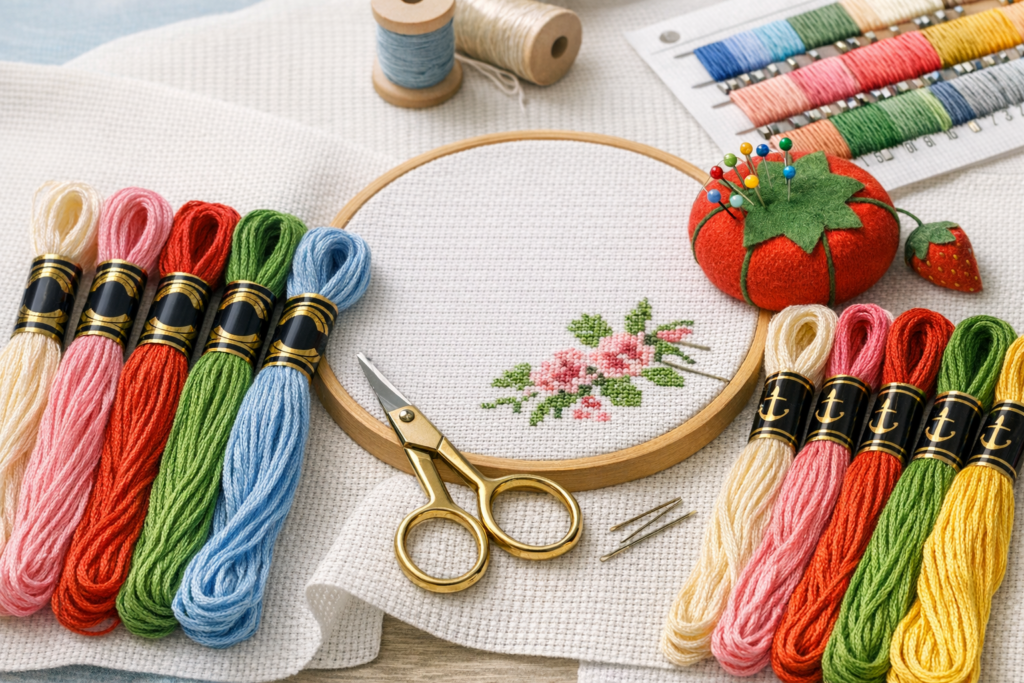
Both DMC and Anchor floss are six-strand skeins of 100% cotton embroidery floss designed for cross-stitch, surface embroidery, and other needlework. Each skein is made to be separated into six individual strands, which you typically use two strands of for standard cross-stitch on even-weave fabrics or 14-count Aida. The key differences lie in color catalogs, regional availability, and how each brand presents its colors in charts and patterns.
In practice, most stitchers will choose a brand based on availability, the color range that matches a pattern, and personal preference for how the thread behaves when stitching. The two brands are compatible in the sense that you can successfully complete a design using either, or by mixing brands with care. The choice often comes down to color selection, chart access, and what you already have in your stash.
Brand background and color philosophy
DMC floss: breadth of color and global accessibility
DMC is widely recognized as a global standard in embroidery floss. The company offers a broad catalog of colors, including both solid colors and a variety of special finishes and colorways. Because DMC has a large, consistent color index and widespread distribution, many patterns specify DMC colors or provide DMC-to-other-brand conversion charts. DMC’s color collection tends to emphasize a very broad palette, making it easier to find exact color matches for a wide range of patterns, from traditional samplers to contemporary designs.
Anchor floss: regional charm and a distinct color collection
Anchor floss is a long-standing option, especially popular in Europe and among stitchers who follow regional patterns and color systems. Anchor maintains its own color catalog, which can differ from DMC’s color numbers even when the colors look similar. For cross-stitchers who shop locally or who prefer a brand with a strong, recognizable presence in their region, Anchor offers reliable color consistency and ease of use. Some projects and charts written for UK or European markets may list Anchor color numbers, so having both brands available can be advantageous in certain locales.
Materials, construction, and colorfastness
What the floss is made of
Both DMC and Anchor floss are designed as 100% cotton, mercerized embroidery floss. Mercerization gives the thread a slight sheen and helps the color sit evenly on fabric, which many stitchers favor for the crisp, clean look in cross-stitch. The construction is similar: six separate strands tightly plied to form a smooth, strong thread that can be separated for using two strands or kept together for a bolder line, depending on the fabric and pattern.
Colorfastness and care
Both brands are marketed as colorfast under typical laundering conditions, which means they should retain their color through standard washing and normal handling. However, colorfastness can vary by color in any brand. To protect your work, it’s a good practice to:
Test a small stitch on a scrap piece of fabric using the same dye lot you plan to use for the project.
Wash a sample soon after finishing your first block to observe any color bleed.
Follow pattern instructions for washing or finishing if the project is intended to be washable.
In practice, both brands hold up well for typical cross-stitch projects, though you should still treat fabrics and colors with the care you’d apply to any dyed fiber product.
Color range, charts, and pattern compatibility
Color range breadth
DMC is widely praised for its extensive color range, including a wide selection of neutrals, brights, and specialty colors. This breadth makes it a favorite when patterns rely on precise color matching or you’re working with complex color transitions. Anchor offers a robust color catalog as well, with well-curated ranges that suit many traditional and contemporary designs. The two brands often complement each other, and many stitchers keep both in their stash to fill color gaps or to match a chart that references one brand or the other.
Pattern charts and color matching
Patterns and charts may be printed with color keys labeled by DMC numbers or Anchor numbers, depending on the designer or publisher. If a chart uses one brand’s color numbers, you can typically substitute the other brand using a conversion guide or by selecting the closest color match by visual comparison. However, exact one-to-one color equivalence is not guaranteed across brands due to variations in dye lots and shade naming. If you plan to mix brands, consider these tips:
Use a color card or floss sampler to compare shades side by side before stitching.
Prefer patterns that specify a single brand to minimize guesswork, or be prepared to test several color matches.
Label unused skeins clearly to avoid mix-ups later.
Practical considerations for cross-stitch projects
Fabric compatibility and stitch density
Both flosses behave similarly on standard cross-stitch fabrics like Aida and evenweave. The choice of brand does not generally affect the ease of crossing stitches or fabric compatibility. What matters more is thread usage:
Two strands are typical for 14-count Aida to achieve even coverage without gaps.
One or three strands can be used for fine linen or higher-count fabrics where a finer appearance is desired.
For larger blocks of color or shaded areas, some stitchers prefer using two strands consistently to maintain uniformity across the piece.
Specialty colors: variegated and metallic options
Both brands offer specialty lines, including variegated colors and metallic floss. Variegated threads can create progressional color shifts that add depth and interest to a design. Metallic floss adds shine and texture, but it can behave differently in stitching—being more prone to snagging or fraying. If your project relies heavily on metallics or variegated skeins, test stitching on scrap fabric to gauge how well the strand handles and plays with your chosen fabric and needle.
Cost, availability, and regional considerations
Pricing and value
Prices for DMC and Anchor floss vary by region, retailer, and current promotions. In many markets, the price difference between the two is modest, so selection often comes down to color coverage, ease of purchase, and personal preference for how the thread feels and behaves. For large projects, the total cost may hinge on whether you already own a large selection of one brand’s colors, reducing the perceived value of buying a second brand for consistency.
Availability and regional habits
In some regions, Anchor is deeply entrenched and patterns or kits may be marketed with Anchor colors. In others, DMC dominates, with broad distribution and strong pattern support. If you frequently work from patterns printed with a specific color index, that can influence your choice. It may also affect your decision on whether you should stock both brands to ensure you can complete patterns without waiting for a color restock.
How to choose the best brand for your project
Step-by-step selection guide
Assess the project requirements: pattern color keys, chart references, and the fabric count you’re using.
Check your local supply: can you reliably obtain the needed colors from a single brand, or do you have to mix brands?
Consider the aesthetic you aim for: if you want a very precise color match to a chart, favor the brand favored by the chart or use color-matching tools carefully.
Test on a scrap: stitch a small sample using the brand you plan to use to see how it looks on your fabric, how it threads, and how it feels in hand.
Plan for future projects: if you anticipate swapping between patterns that reference different color systems, keeping both brands on hand can save time.
Practical steps for starting with either brand
Purchase a color card or color chart for quick reference. If you have a cross-stitch kit, it may include the relevant chart.
Label your skeins with color numbers, lot numbers, and a brief description of the project to avoid confusion later.
Store floss in a clean, dry place away from sunlight, ideally in resealable bags or a floss organizer to prevent tangling and fading.
Projects, brand choice, and finishing considerations
For large, long-term projects where color matching is critical and you want a wide palette, DMC’s breadth can be advantageous. Patterns published in international magazines or kits from diverse vendors may lean on DMC color codes, making it helpful for consistency. If you prefer a reading system that aligns with UK or European patterns, Anchor can be equally valid and offers reliable color accuracy within its catalog.
Another practical angle is whether you plan to mix regular floss with specialty threads. If your design uses a mix of standard DMC/Anchor colors and metallic or novelty threads, you may want to keep both brands handy so you can integrate variegated or metallic threads without forcing a color mismatch in the bulk of your work.
Care, finishing, and long-term storage best practices
When you finish a project, standard washing instructions for cross-stitch apply. Use a gentle cycle or hand wash, and avoid harsh detergents that could fade colors. Dry flat away from direct heat or sunlight to prevent color shift and fabric distortion. For storage, keep your finished pieces away from moisture, dust, and sunlight to preserve color integrity over time. If you document your project with photographs, note the floss brands used so future restorations or remounts can replicate the original palette.
Summary: which thread is better for cross-stitch projects?
There isn’t a universal “better” thread for cross-stitch between DMC and Anchor. Both brands deliver dependable, colorfast, 100% cotton floss that can yield beautiful results on a wide range of fabrics. The best choice depends on your specific project, local availability, and how you prefer to approach color matching and chart references. If your pattern relies on a particular color index or you work frequently with patterns published in a region that favors Anchor, Anchor may be the natural choice. If you want the broadest color selection, the easiest cross-brand charting, and global distribution, DMC is a strong default option.
Ultimately, many cross-stitchers adopt a pragmatic approach: stock both brands, use DMC for the majority of a design that requires a precise color map, and bring in Anchor for regional charts, limited color selections, or for variety in palettes. With careful testing, labeling, and organization, you can achieve consistent results regardless of which brand you choose.
Frequently asked questions
Are DMC and Anchor floss interchangeable?
In practice, you can substitute one brand for another, but exact color matches are not guaranteed. If a pattern is color-coded to a specific brand, you may need to compare swatches, use conversion charts, or test different colors to achieve a close match. Mixing brands is common among stitchers who want to honor a specific color that isn’t available in the other brand, but plan for potential slight shade differences in large areas.
Is one brand cheaper than the other?
Prices vary by region and retailer, and promotions can shift the balance. In some markets, Anchor and DMC sit in a similar price range; in others, one may be slightly more affordable. For budgeting, consider the total color count needed for a project and whether you will need to purchase additional colors to complete the pattern.
Which brand has the broader color catalog?
DMC generally offers a broader color catalog overall, which is helpful for patterns with extensive color variety. Anchor also maintains a substantial catalog, especially in markets where it is a staple choice for cross-stitchers. The best approach is to check the color chart for your pattern and compare the closest matches in both brands.
Does one brand have better colorfastness or durability?
Both brands are designed to be colorfast under normal cross-stitch care. No significant differences are widely claimed across the mainstream community. If you are stitching a piece that will receive frequent washing, you should still test colorfastness on a sample and follow fabric care guidelines.
Can I mix strands from DMC and Anchor in the same project?
Yes, you can mix brands, but be mindful of the visible differences in hue, saturation, and dye lots. For a harmonious look, test a small area and avoid mixing shades that are only slightly different in lightness or color temperature. Keeping notes on swaps will help you reproduce or adjust later.
What should I do if my pattern provides a color key in one brand and I only have the other?
Use a conversion guide or compare the closest color visually on a swatch. It’s best to stitch a small sample to confirm the match before committing to a larger section. When possible, align your choice with the pattern’s primary color index to minimize color mismatches.
Spring birds -free cross-stitch design Spring birds with spring flowers -this fantastic cross-stitch design will provide you with a spring mood! Fabric: Aida 14, Mushroom 156w…
cross-stitch pattern “The Last Supper” Cross-stitch pattern “The Last Supper” -the famous “Last Suppe”r exists as cross -stitch pattern now ! The Last Supper is a…
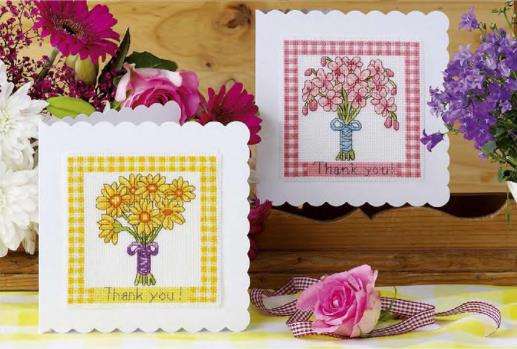
Cross-stitched thank you cards. After birthdays and celebrations, it’s always nice to send thank you cards to all the people who have helped to make it…
For cross-stitch enthusiasts, the choice between DMC and Anchor floss often comes down to practical considerations: where you shop, which color indices your patterns reference, and how much you value a broad color palette versus regional familiarity. Both brands deliver dependable, high-quality floss that can produce stunning results. By understanding the differences and following practical steps—testing color matches, organizing your stash, and keeping clear project notes—you can confidently complete cross-stitch projects with either brand. The best approach is informed flexibility: use the brand that best fits your pattern, your locale, and your stitching goals, and don’t hesitate to blend brands when a particular hue is required to bring your design to life.